
 By
The Fraunhofer-Gesellschaft reinforced its commitment to advancing Indo-German collaboration in applied artificial intelligence (AI) at the India AI Summit 2026 held at Bharat Mandapam, New Delhi. Through a series of curated platforms and high-level engagements, Fraunhofer brought together policymakers, industry leaders, scientists and innovators to accelerate the deployment of AI across manufacturing, agriculture, healthcare and governance, rooted in trust, responsibility and shared democratic values.
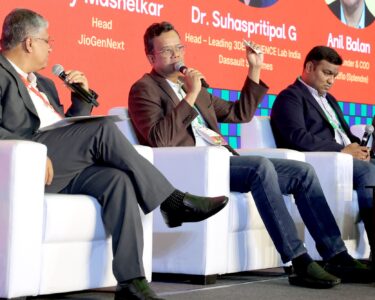
At the centre of the engagement was the Indo-German Innovation and Technology Forum titled “AI for Economic Development and Social Good,” which convened leading voices from German industry and research. Among the participants were Dattatri Salgame from Bosch, Sindhu Gangadharan from SAP, Prashant Doreswamy from Auvomio and Anshuman Awasthi from Mercedes-Benz Research and Development Centre India. The discussions focused on scaling applied AI solutions responsibly while ensuring measurable economic impact and societal benefit.
The Guest of Honour, Kristina Sinemus, Hessian Minister for Digitalisation and Innovation, emphasized that AI is already transforming the way societies produce, heal, grow food and govern. She noted that the fundamental question is not whether AI will shape society, but how economic development and social good can advance together. Stressing a human-centric approach, she stated that technology must serve people, not the other way around. Referring to India’s digital public infrastructure initiatives, she observed that India has demonstrated how innovation can scale at massive levels, while Germany brings strengths in balanced regulation, data protection and quality assurance. Together, she said, both countries can bridge innovation and safeguards, scale and rights, grounded in shared democratic values.
Georg Enzweiler, Deputy Chief of Mission at the German Embassy in New Delhi, highlighted AI’s vast potential to drive economic and social transformation, particularly in agriculture and manufacturing, while underscoring the need for inclusive and sustainable growth. He also acknowledged Germany’s growing investments in AI for climate and sustainability and praised India’s strong and dynamic AI talent ecosystem.
Dr. Thomas Kuhn, Head of Embedded Systems at the Fraunhofer Institute for Experimental Software Engineering, presented breakthrough technologies including the Virtual Employee and a Dataspaces Platform designed to enable secure exchange of data and collaborative projects. These innovations reflect Fraunhofer’s focus on applied research that translates quickly from laboratory environments to industry-ready solutions.
Anandi Iyer, Director of Fraunhofer Office India, highlighted that Fraunhofer is one of the world’s largest applied research ecosystems, with 76 institutes in Germany and a presence in more than 80 countries. She noted that the organization generates two patents for every working day and is credited with pioneering technologies such as MP3 and white LEDs. Emphasizing India’s growing need for translational research, she remarked that Fraunhofer has an important role to play in accelerating the journey from research to market, adding that it was among the first international R&D organizations to establish a presence in India 18 years ago.
Dr. Raj Kumar Upadhyay, CEO of the Centre for Development of Telematics (C-DOT), shared insights into C-DOT’s capabilities in detecting and preventing fraudulent calls and financial threats. He described the collaboration with Fraunhofer as a highly valued partnership that will accelerate advancements in internet security, 5G and 6G technologies, quantum research, AI and telecommunications.
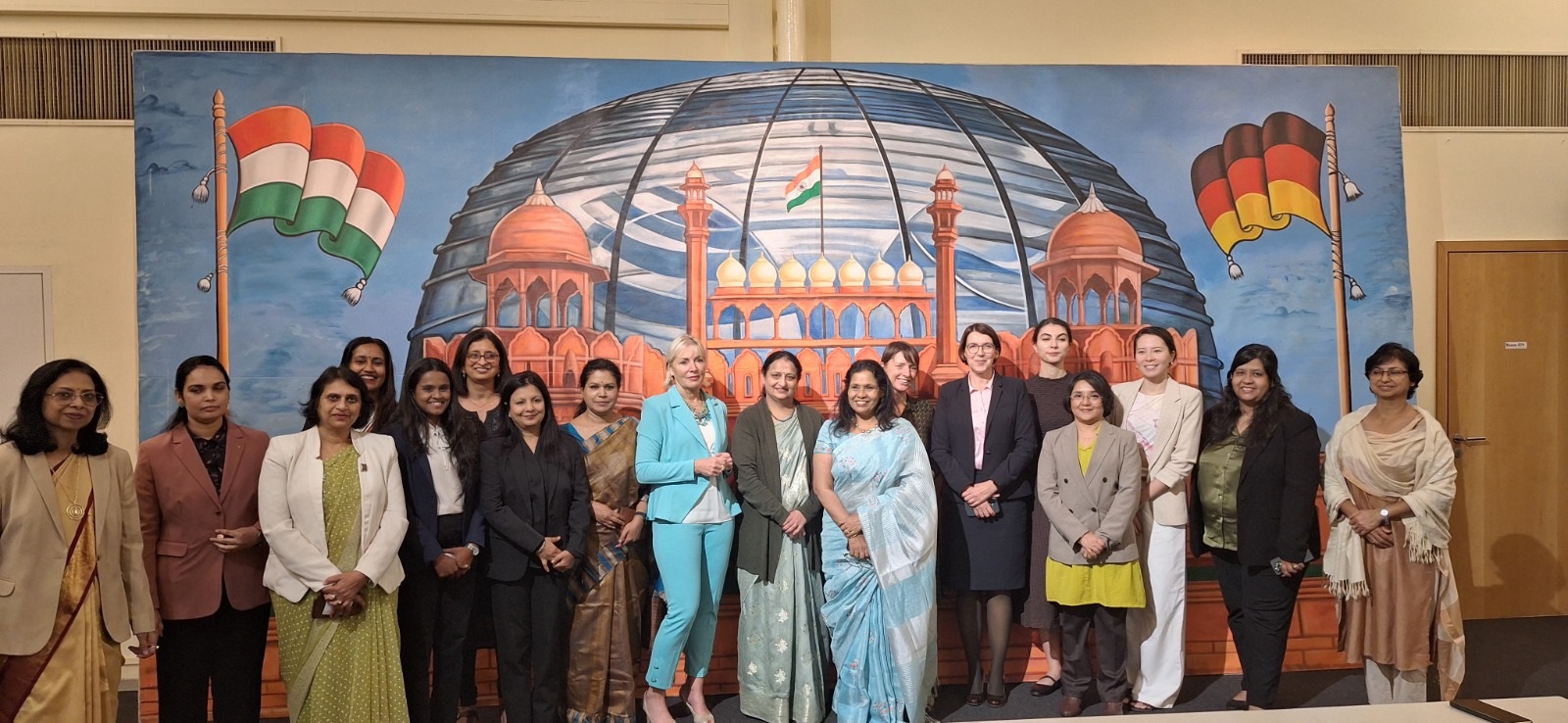
On the sidelines of the summit, Fraunhofer also hosted “Women in Science and Technology: A Business Case Imperative for an Equitable World,” chaired by Prof. Dr. Kristina Sinemus and Dr. Parvinder Maini, Scientific Secretary at the Office of the Principal Scientific Advisor to the Government of India. Ten women leaders from India and ten from German industry and academia shared their journeys, challenges and achievements, calling for a sustained cross-border platform to strengthen mentorship, collaboration and leadership in science and technology. Dr. Maini emphasized that leadership in science and technology demands audacity, resilience and purpose, and advocated deeper Indo-German co-creation alongside stronger global science advisory mechanisms to address shared challenges in AI and climate innovation.
In another key discussion focused on agriculture, Raghu Chaliganti of Fraunhofer HHI and ITU stressed that scaling AI in agrifood systems requires robust governance, interoperability and high-quality data. He cautioned that fragmented digital solutions often fail farmers and advocated integrated, standardized platforms capable of delivering real-time, farmer-centric decision support to mitigate climate risks and improve outcomes.
Through its wide-ranging engagements at the India AI Summit 2026, Fraunhofer reaffirmed its commitment to inclusive, applied innovation and strengthened Indo-German cooperation as a model for responsible AI deployment that aligns economic growth with social progress.